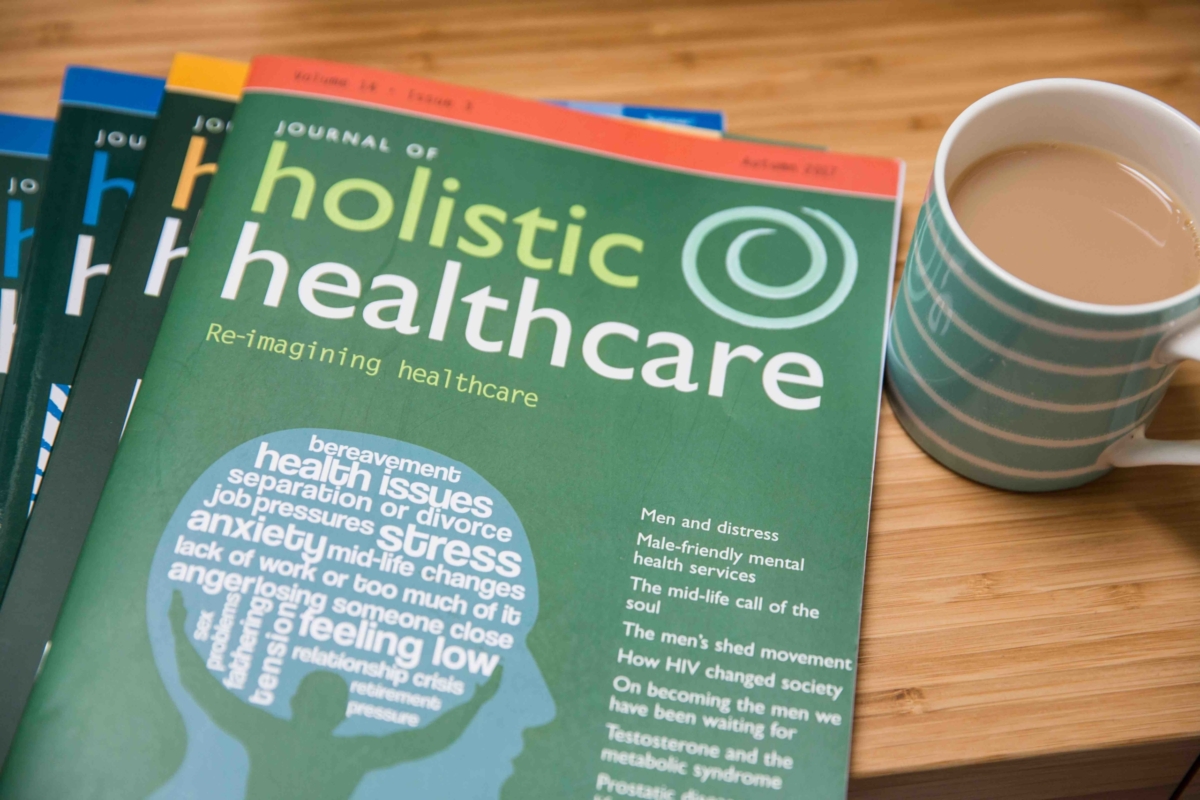
JOURNAL OF HOLISTIC HEALTHCARE - Issue 7.1 - May 2010
 |
|
 |
 | BHMA Full Members
Download Free |
|
| Non-members: £12.50 + p&p |
 | View Editorial Free to all users |
BHMA Full Members can also download articles by clicking on the title of the article.
Non-members may purchase digital copies of individual articles for £1.50 |
|
JOURNAL OF HOLISTIC HEALTHCARE Close
Issue 7.1 - May 2010
- Editorial
- A brief summary of holistic wellness literature
Gord Miller and Leslie T Foster Faculty of Human and Social Development & Department of Geography, University of Victoria
This article is a summary of current holistic wellness literature, involving online database keyword searches, additional searches for
other studies, screening of abstracts, assessing the relevance to the review and integrating the findings. More than 300 journal articles, books and websites were examined or accessed to determine how wellness was defined and to find research and wellness models. A complete report and wellness mapping products can be found at www.geog.uvic.ca/wellness.
- Wellbeing: conceptual issues and implications for interdisciplinary work
Sarah Edmunds Department of Psychology, University of Westminster
Wellbeing is a common term in both policy and academia but it is often
used in a conceptually vague way and means different things to different
people.These issues may limit its potential to create the positive changes that are intended by those who promote wellbeing. Interdisciplinary research and practice offers great potential to further our understanding of, and ability to enhance, wellbeing. However, this type of research is challenging.
- Work at the nef Centre for Well-being
Juliet Michaelson Researcher, Centre for Well-being, nef
nef is an independent think-and-do tank founded in 1986 that inspires and
demonstrates real economic well-being. nef's vision is of a society where wealth is defined and measured in terms of wellbeing. This means recognising and supporting what really makes us happy ? such as
meaningful work, time with our friends and family, creative education, and a real sense of community. nef believes only then can we move towards a truly flourishing society.
- Is it all downhill from day one at medical school?
Jessica Morgan, Funke Adefope, Amy Bissell,Angela Clarke, David Collins,Michaela Harvey, Ian Kear,Danielle Lednor, Anna Stubbs,Craig Brown Brighton and Sussex Medical School
This paper investigates how wellbeing is affected during progression through years one to four of medical school. It used a one-time only
self-rated wellbeing question. The results obtained suggests that
wellbeing may decline through medical school and confirms some previous
studies that males seem to rate higher than females in wellbeing scores. This was a useful pilot tool and further surveys are now required.
- Is it all downhill from day one at medical school?
Jessica Morgan, Funke Adefope, Amy Bissell,Angela Clarke, David Collins,Michaela Harvey, Ian Kear,Danielle Lednor, Anna Stubbs,Craig Brown Brighton and Sussex Medical School
This paper investigates how wellbeing is affected during progression through years one to four of medical school. It used a one-time only
self-rated wellbeing question. The results obtained suggests that
wellbeing may decline through medical school and confirms some previous
studies that males seem to rate higher than females in wellbeing scores. This was a useful pilot tool and further surveys are now required.
- The community and the chocolate factory
William House
A new strategy for wellbeing
- The heart of wellbeing: A self-help approach to recovering, sustaining and improving wellbeing
Craig Brown GP and Jan Alcoe Trainer
This article outlines the development of a book and CD called The heart of
well-being: seven tools for surviving and thriving that aids individuals to
maintain and improve their wellbeing - physically, mentally, emotionally and spiritually. It describes the background to developing the resource from a healthcare training programme on values and spirituality, and provides a summary of the methodology and content with illustrative examples.
- Reframing the wellbeing debate: It's political not scientific
William Bloom Author, educator, activist in the field of holistic development
Holistic health practitioners know that an essential part of wellbeing is our connection with the wonder and energy of nature and all life. But
they are often excluded from mainstream medicine due to accusations of 'bad
science' especially when they mention energy, qi or prana. This paper suggests that practitioners move on from that debate and be encouraged by the NHS's full support of spirituality in best practice. It also
encourages practitioners to write Holistic whenever they are asked to fill in a form with a religion box.
- Improving global wellbeing, improving personal wellbeing
Jason Ferdjani Medical student
The BHMA runs an annual student essay prize with a ?250 prize for the winner.
Here we print this year's winner.
- Applied 'generative space': improving health and wellbeing through your practice environment
Wayne Ruga Founder and President,The CARITAS Project
This article discusses 'generative space' as being the sustainable means to
improve health, healthcare, and wellbeing with the environment. The article is a brief report on an advanced phase of original research, spanning seven years, being conducted in five countries by the author.
- The Positive Care Programme: A holistic approach for people with long-term illness and carers
Su Mason Director of the Positive Care Programme
The Positive Care Programme is a registered, Leeds-based charity, which
provides a free 24-week course of complementary therapies and motivational
workshops for people with long-term health problems and unpaid carers. It is designed to give attention to the mind, body and spirit, so that over time positive change may be experienced.
- Does mindfulness increase wellbeing?
Caroline Hoffman Clinical Director and Research Co-ordinator, Breast Cancer Haven
Since the 1960s interest in mindfulness and its practice in the west has
been steadily growing. Mindfulness programmes such as Jon Kabat-inn
devised 30 years ago have supported the introduction of mindfulness practice into healthcare, education and society. As people search out ways for preventing illness and improving their health and wellbeing, the
need for such non-doctrine based programmes has never been greater. The
increasing number of health professionals providing mindfulness programmes
reflects this, as does the recent burst of healthrelated research in the
area, which this paper overviews.
|
Close |
|
|
If the NHS is to stop digging itself into an ever-deeper hole, it will have to do things differently in the long term. Whichever party is in power will need a 21st century understanding of individual and communal wellbeing; of the resilience a good society should be preparing to nurture at every level - from the genome to the ozone layer. This issue of JHH considers how a holistic (but scientific) grasp of wellbeing could shape a new politics of healthcare.
|
JOURNAL OF HOLISTIC HEALTHCARE - Issue 6.3 - Nov 2009 view

 |
|
 |
 | BHMA Full Members
Download Free |
|
| Non-members: £12.50 + p&p |
 | View Editorial Free to all users |
BHMA Full Members can also download articles by clicking on the title of the article.
Non-members may purchase digital copies of individual articles for £1.50 |
|
JOURNAL OF HOLISTIC HEALTHCARE Close
Issue 6.3 - Nov 2009
- Editorial
- What we do to the earth, we do to ourselves
Isabel Clarke, Consultant clinical psychologist
My intention is to draw out a deep connection between our human wholeness and well-being, and the health of the earth that sustains us and all creatures with whom we share this planet. My starting points are that our self-sufficient individuality is partially illusory, and that the human mind has two fundamentally different dual ways of knowing. This cognitive model gives equal weight to self-conscious individualism, and to the reality of our interconnectedness. Recognition of these dual aspects provides a starting point for rebuilding our fractured relationship with the planet, and it has implications for psychotherapy, and for the future of us all.
- Resilience, recovery and the self-help SSRI
Chris Johnstone , Addictions specialist
As we enter a new era of economic uncertainty and environmental concern, polls show many consider the condition of our world to be getting worse. Against this background of anxiety, depression has become the modern epidemic. Yet as well as bringing nightmares and despair, could our current crisis also call forth strengths and qualities associated with positive mental health? This article explores how crisis can become a turning point in personal and planetary healing, and introduces 'the self-help SSRI' as an intervention to strengthen our resilience and participation in the recovery of our world.
- Yearning for our niche: the role of meaningfulness in eco-systemic health
Paul Maiteny, Ecological counsellor and transpersonal psychotherapist
As human beings, we mostly use our capacities to invent ever more ingenious ways of satisfying desires through what can be called a 'consuming orientation'. Our survival depends on moving beyond this orientation, toward a 'contextualising orientation'. But this seems difficult, even though we are acutely aware of the impending crisis. The challenge for 21st century humankind is to live as part of a bigger context, in which meaningfulness comes from seeking our true niche in the ecosystem. Finding the cultural impetus for sustained change will call for changing our currently entrenched habits of belief, which is not a trivial task.
- Nature as subject: Exploring anthropocentrism
Mary-Jayne Rust Psychotherapist and ecopsychologist
In this paper I argue that our dominant culture both idealises and denigrates nature. Either way nature is treated as a collection of objects at our disposal, apparently separate from humans, rather than subjects to be related to. Arguably these attitudes are central to our current environmental crisis. I explore some of the projections that humans place onto the rest of nature and ask how these issues are relevant to therapy. Lastly I offer some thoughts about our role as therapists within the wider community as our global crisis quickens.
- Rooted in health
William Bird, GP, strategic health advisor to Natural England
Access to green spaces promotes health and wellbeing, not only of individuals but of whole communities. Over time, public health policy has taken this into account, but with the increasing emphasis on medical solutions to society's many health problems, the healing power of nature has largely been forgotten. However, a growing body of research demonstrating the positive impact of green space on human health and wellbeing suggests that addressing 'green-deprivation' would help narrow the health gap between rich and poor. With this is mind, Natural England?s Natural Health Service initiative will bring the natural environment to people where they live and work, and bring people out to the natural environment.
- Community transformation through Diggin'It
Pat Fleming Writer, researcher and educationalist
Deep in the city of Plymouth, people are getting their hands dirty and improving their health and wellbeing. Excluded schoolkids, refugees and people with specific health problems come together for practical work and courses that benefits not just themselves but also the wider community.
|
Close |
|
|
We need a new story about the human psyche, and this issue of JHH explores a radically different ecopsychological account of human nature. Ecopsychology views Nature as intelligent and human beings as integral with Nature. It sees our environmental, economic and ethical crises, and humankind's
widespread anguish, as diverse aspects of a single problem. And it suggests that solutions will depend on human beings achieving a more holistic relationship with the non-human world.
|
JOURNAL OF HOLISTIC HEALTHCARE - Issue 6.2 - Aug 2009 view

 |
|
 |
 | BHMA Full Members
Download Free |
|
| Non-members: £12.50 + p&p |
 | View Editorial Free to all users |
BHMA Full Members can also download articles by clicking on the title of the article.
Non-members may purchase digital copies of individual articles for £1.50 |
|
JOURNAL OF HOLISTIC HEALTHCARE Close
Issue 6.2 - Aug 2009
- Editorial
- Emotions and self-regulation for the heart
Elizabeth Wilde McCormick Psychotherapist, teacher, writer
This is drawn from my experience as a psychotherapist working with patients who have heart problems. They come to me through referrals made by GPs, cardiologists or physiotherapists or because they self-refer having read one of my books. The psychological interventions I use are varied and could be as brief as a single hour-and-a-half assessment with a three or six month follow up, short-term weekly interventions for eight to sixteen sessions or occasionally longer therapy stretching over several years.
- Self-care and the need for interactive ICT
Tuvi Orbach CEO, Health-Smart Jane Vazquez Health Education 'Physiologist', Health-Smart
Long-term conditions threaten to bankrupt the NHS, as lifelong drug packages allow us to live longer but less healthy lives. If our overfed, stressed, under-exercised lifestyle is at the root of the problem, then millions of us will need help to make big changes. The health trainer role is full of potential, but they and people with or at risk of LTCs also need expert knowledge and support. Fortunately, advances in interactive ICT can now put a health coach in every pocket and every home.
- Self-care and CAM: defining the differences, recognising the similarities
Karen Pilkington Senior Research Fellow, School of Life Sciences, University of Westminster
Self-care is promoted as an integral part of a 'patient-centred health service'. But how is self-care defined? And when is CAM considered self-care? Some of the basic tenets of self-care and of CAM are compared to highlight similarities. CAM appears to have a primary role in chronic, poorly defined and difficult to manage conditions. Patients with these conditions seek self-care options and frequently choose to use CAM. Choice is affected by cost and accessibility. Feasibility in practice and personal recommendation also play important roles in decision-making.
- Helping street sex workers make healthy life choices
Josie Hill Fundraising and Publicity Co-ordinator, One25
One25 is the England winner of the 2008 Prince's Foundation for Integrated Health awards. It has a unique impact as the only organisation in Bristol that focuses on the specific needs of women trapped in street sex work. One25's extraordinary service brings food, therapies and medical services to women, and as a result many have left sex work behind, reclaimed their children from care and now lead normal lives. One25 gives these vulnerable women the support they need to escape and build towards a healthier future.
- Using mind-body medicine for self-awareness and self-care in medical school
Scott Karpowicz Third year medical student, Mind?body Medicine Group participant Nancy Harazduk Director, Mind?body Medicine Program, Georgetown University School of Medicine Aviad Haramati Professor of Physiology and Medicine, Georgetown University Scho
An innovative educational program at Georgetown University School of Medicine teaches mind-body medicine skills to blend science and humanism to foster student and faculty self-awareness and self-care.
- Helping patients to help themselves
Ruth Chambers GP & clinical champion for the Lifestyle Support Programme, NHS Stoke on Trent, Honorary Professor Staffordshire University
If people want to live for as long a time as their genes allow and be as healthy as possible then they have to take responsibility for their own health and wellbeing. There's only so much the NHS can do for people with long-term health conditions: nagging and motivating them to better their lifestyle; sharing the'power' of medication in jointly agreed management plans. An all-round integrated approach means consistent advice, person-friendly local lifestyle services, with high ratings for everything that will help - conventional treatments, alternative therapies and personal support.
- Self-care, self-care, self-care...:have we been missing something?
Simon Y Mills Herbal practitioner
Complementary approaches may be ideally suited to supporting self-care rather than extending prescriptive medicine, and practitioners may rediscover their role as mentors. The Department of Health may be ahead of the professions in understanding the importance of this.
- NHS LifeCheck: Self-care online Empowering the socially-disadvantaged to manage personal lifestyle change
Dr Sunjai Gupta Deputy Director, Head of Public Health Strategy and Social Marketing Branch Health Improvement and Protection Directorate, Department of Health, England Maria Reeves NHS LifeCheck,
What measures should be taken to motivate socially disadvantaged individuals to embark on a programme of health-related behaviour change? How can a simple lifestyle quiz promote self-care and reduce health inequalities? Could a website increase an individual's capacity for change? How does NHS LifeCheck fit into a health professional's toolkit and impact on PSA targets without increasing their workload?
|
Close |
|
|
Integrated self-care: developing individual and communal wellbeing
Though the course of human life is uncertain, in our privileged society people can expect longer, safer lives than their recent forebears: a mean of 77 years for men, and 82 for women in the UK. The NHS seems conceptually committed to extending lives further by permanently medicating us. Deals that cheat disease and death are a timeless part of the human story, but the mythic downsides are always clear to see. Big Pharma?s Faustian bargain with the NHS is mirrored in soaring healthcare costs, and high rates of side-effects: too often, the years added by poly-pharmacy are spent feeling unwell.
|
JOURNAL OF HOLISTIC HEALTHCARE - Issue 6.1 - May 2009 view

 |
|
 | BHMA Full Members
Download Free |
|
| Non-members: £12.50 + p&p |
BHMA Full Members can also download articles by clicking on the title of the article.
Non-members may purchase digital copies of individual articles for £1.50 |
|
JOURNAL OF HOLISTIC HEALTHCARE Close
Issue 6.1 - May 2009
- The campaign against CAM - a reason to be proud
Harald Walach Research Professor in Psychology, University of Northampton
Does the campaign against CAM indicate that powerful factions feel threatened? A complacent CAM world has been slow to collect supporting data, but the waning of big pharma's once unassailable economic and clinical dominance may be a significant motivator for some who oppose integration. With biotech innovation slowing down, and adverse event scandals and research irregularities, users are distrusting flagship revenue-producing medications. As healthcare policy reshapes mainstream medicine we will need to understand the forces ranged against integrated medicine.
- High costs, large disease burden
Jonathan Lord, MD. CEO Navigenics, former CEO Humana EU
One of today's greatest health challenges is the rising burden of disease and the associated costs. There are good arguments - financial and health-based - for using more CAM to help people be healthier.
- Challenges in interpreting and applying the evidence for CAM and IM
Catherine Zollman GP and Hugh MacPherson Senior Research Fellow, University of York
This paper explores the reasons why evidence based medicine has only a limited role in informing real world practice. We set out why this appears to be an issue particularly for complementary, alternative and integrated medical practice. We also address the need for a research agenda that focuses on developing evidence that is relevant to the field. This will include research beyond placebo-controlled trials and that will incorporate characteristics of a patient-centred medicine.
- Vested interests and the greater good
William House GP, researcher, commissioner, BHMA trustee
The title of this article expresses an essential tension we have to live with. How we negotiate this tension will determine whether we thrive, or even survive, as a species. Currently we are not doing well. So much is obvious from the inequalities between rich and poor, and the degradation of the environment.
- More harm than good?
George Lewith Professor of Health Research, University Of Southampton School of Medicine
All medical interventions involve balancing benefit and risk. CAM has a poor evidence base associated with very little research spending, as does much chronic benign illness managed conventionally. Adverse reactions to conventional interventions are common, dangerous and expensive. CAM appears to be relatively safe and possibly equally effective although more research is needed. The evidence for the effectiveness and safety for some interventions has been selectively misrepresented by those who oppose CAM. They have suggested inappropriate research methods and exaggerated the risks, thus unhelpfully polarising opinions and denying patients an integrated approach to their condition.
- Integration, long term disease and creating a sustainable NHS
David Peters Professor of Integrated Healthcare, School of Integrated Health, University of Westminster; Chair, British Holistic Medical Association
Healthcare faces three interconnected crises of cost, cure and care. Costs are soaring as a pandemic of chronic disease outstrips the development of cures, and caring is losing ground as medicine industrialises and its commitment to timeless principles wanes. Our medical system can pull out of this high-tech nosedive and become more sustainable if it develops a new model of health, recovers timeless shared values, and explores the potential of integrated medicine.
- Approaches to healthcare: connectedness and spirituality
Dr Denise Peerbhoy Director, The Commonsense Partnership Limited
This paper explores the importance of the relationship between healthcare practitioners and clients in a particular healthcare setting. The research reviewed user narratives to explore the experience and health impact of contact with this service. The results revealed evidence of a 'response shift', ie changes in people's self-perception of their quality of life. A significant feature of the healthcare provided was
the therapeutic value of the practitioner-client interaction itself.
- On becoming a 'recovery ally' for people with depression
Damien Ridge Reader in Integrated Health, University of Westminster
Depression is unique in the way it attacks the mind and undermines the 'voice' and patient abilities to tell a life-giving story. So how then do patients actually go about organising their recovery from depression? What is the role of memory and narrative? And how can professionals best encourage revitalising narratives?
- Nursing in partnership with patients means embracing integrated healthcare
Donna Kinnair DBE Director of Nursing, The Foundation for Integrated Health
Improving the quality of care for patients will require nurses to understand how patients integrate complementary therapies into their self-care. If nurses are to work in partnership effectively they will have to learn to facilitate integration effectively, and that will mean understanding more about these ideas and practices.
- An integrated approach to gynaecology
Michael Dooley Consultant Gynaecologist, The Poundbury Clinic
Gynaecology and women's health is ideally suited for an integrated approach. Women must be offered a choice with a team approach. It is essential to have good communication between different practitioners. The problems with developing evidence base is raised and a systematic approach to the integrated management of patients using the acronym DR AID is discussed. The problems of infertility, menopause and premenstrual syndrome are also addressed.
- The challenge of obesity
Chris Drinkwater Emeritus Professor of Primary Care Development, Northumbria University
Knowledge and information about the management of obesity remains firmly located within a disease-based medical model. This model is inherently paternalistic and tends to undermine both collective and individual responsibility for our behaviours.We need to shift to a model that is about fully engaging the public as co-producers of health. Challenging the prevailing orthodoxy of the medical/pharmaceutical industrial complex will not be easy, but sustainable long-term solutions will only be achieved if we are serious about devolving responsibility, power and funds to local communities.
|
Close |
|
|
Integrated self-care: developing individual and communal wellbeing
Though the course of human life is uncertain, in our privileged society people can expect longer, safer lives than their recent forebears: a mean of 77 years for men, and 82 for women in the UK. The NHS seems conceptually committed to extending lives further by permanently medicating us. Deals that cheat disease and death are a timeless part of the human story, but the mythic downsides are always clear to see. Big Pharma's Faustian bargain with the NHS is mirrored in soaring healthcare costs, and high rates of side-effects: too often, the years added by poly-pharmacy are spent feeling unwell. This issue explores self-care of mind, body, spirit and community.
|
JOURNAL OF HOLISTIC HEALTHCARE - Issue 5.4 - Dec 2008 view

 |
|
 |
 | BHMA Full Members
Download Free |
|
| Non-members: £12.50 + p&p |
 | View Editorial Free to all users |
BHMA Full Members can also download articles by clicking on the title of the article.
Non-members may purchase digital copies of individual articles for £1.50 |
|
JOURNAL OF HOLISTIC HEALTHCARE Close
Issue 5.4 - Dec 2008
- Editorial
- Shadows in Wonderland - a hospital odyssey Staff
Colin Ludlow
When television producer Colin Ludlow was admitted to hospital for an operation, he expected to be home in 10 days. In the event, he ended up staying for five months, nearly died on several occasions, contracted MRSA, and was still recovering from his experiences more than three years later. In Shadows in Wonderland he tells his story, and takes a fascinating philosophical journey through chronic illness as he explores its wider significance. Here we reproduce the chapter Staff.
- Just what the doctor ordered?
Donald Watson Author, ex-cancer patient and patient representative
How happy are patients with medical consultations? What do they like about the way their doctors interact with them? Have their priorities changed in recent decades? How has the success of modern medicine affected both the way doctors behave towards patients and what patients want from doctors? What do patients perceive as still lacking, and how can doctor and patient work together to form a more effective partnership and achieve better healthcare? And where does integrated healthcare fit into all this?
- Radical ordinariness: the women's service in Purley
Foxley Lane Women's Service staff
The Women's Service in Purley, London, is radically different from the stereotype of mental hospitals as frightening impersonal places. A large 1930s house is home for up to eight women at a time who are going through a mental health crisis. Inside, there are bundles of NHS leaflets on the windowsills and the odd reminder of smoking regulations, but otherwise it's an ordinary house offering a unique service.
- Medicine and the healing vocation
Revd Dr Jeremy Swayne
The paper discusses the need to reconcile the achievements of modern medicine with the limitations its methods impose on our understanding of and response to illness; particularly the dichotomy between medicine as a means of controlling disease processes and manipulating body functions, and healing as a process of enabling self-regulation, re-integration, insight and new growth. I suggest that dependence upon the power of medicine to control is at the expense of equally important, sometimes more important, subtle, whole-making functions of healthcare.
|
Close |
|
|
In this issue, cries of distress from one man's journey into the underbelly of hospital care; but also a heartfelt plea for deeper and more compassionate engagement and cooperation between doctors and patients. One collaborative attempt at community mental healthcare suggests that flattening the heirarchy actually improves care. And is it actually care itself that triggers the homeopathic effect rather than water memory? The last of our series of extracts from DK's New Medicine book explores non-pharmamaceutical options for coronary heart disease.
|
JOURNAL OF HOLISTIC HEALTHCARE - Issue 5.3 - Sep 2008 view

 |
|
 |
 | BHMA Full Members
Download Free |
|
| Non-members: £12.50 + p&p |
 | View Editorial Free to all users |
BHMA Full Members can also download articles by clicking on the title of the article.
Non-members may purchase digital copies of individual articles for £1.50 |
|
JOURNAL OF HOLISTIC HEALTHCARE Close
Issue 5.3 - Sep 2008
- Editorial
- Breathing can damage your health
Michael Lingard BSc. DO. BIBH
This is a brief look at the most neglected function of breathing, something that is so unconscious and automatic in our lives that we rarely stop to consider its effects on our health or its protean impact on every disease. 'The breath of life' can be incredibly damaging to our health, especially when chronic hyperventilation is unrecognised, undiagnosed and untreated.
- Midlothian Sure Start
Karen Hooton RSCN, MIFPA, MSIR
Midlothian Sure Start won the 2007 Prince's Foundation for Integrated Health awards. It provides services for vulnerable families with very young children. As well as dealing with the challenge of parenting a naturally demanding age group, many parents are dealing with their own difficulties, which range from poverty, to isolation, to drug addiction. Many have found the treatments of a complementary therapist invaluable.
- The sacred addiction: exploring the spiritual and psychological components of Alcoholics Anonymous
Kevin Hinchliffe Hypno-psychotherapist
The philosophical basis of Alcoholics Anonymous is outlined and the role that spirituality plays is compared to that of psychology. Spirituality is presented in the context of a transpersonal rather than religious experience. In response to concerns about the current lack of spiritual understanding in therapy I introduce the reader to sources of modern transpersonal thinking and the challenges for future development.
- Stress management within the undergraduate medical education curriculum
John Perry Principal Teaching Fellow in Healthcare Communication, University of Southampton Nick Purkis Clinical Skills Facilitator, University of Southampton
In this paper, we present evidence relating to the existence of high levels of stress within medical students, and then consider a range of possible solutions with reference to various curriculum definitions and models. Throughout the paper, the definition of stress we have in mind is that provided by the Health and Safety Executive: 'Stress is the adverse reaction people have to excessive pressure or other types of demand placed upon them' (www.hse.gov.uk/stress). This is distinguished from healthy levels of pressure, which are experienced as motivating rather than debilitating.
- Dear Department of Health...
Lesley Wye Research Fellow, Academic Unit of Primary Care, University of Bristol
Four years ago I look part in a Department of Health 'experiment' and moved into academia to study for a CAM PhD. Could a holistic complementary practitioner survive, or better still thrive, in an academic medical environment? Although I and my fellow 'guinea pigs' have gained from the experience, the impetus for the initiative needs to be maintained or it could be lost amidst lack of funds and attacks on CAM.
|
Close |
|
|
Editorial Info coming soon.
|
JOURNAL OF HOLISTIC HEALTHCARE - Issue 5.2 - May 2008 view

 |
|
 |
 | BHMA Full Members
Download Free |
|
| Non-members: £12.50 + p&p |
 | View Editorial Free to all users |
BHMA Full Members can also download articles by clicking on the title of the article.
Non-members may purchase digital copies of individual articles for £1.50 |
|
JOURNAL OF HOLISTIC HEALTHCARE Close
Issue 5.2 - May 2008
- Editorial
- Engaging in therapeutic dialogues Can holistic practice lead the way towards a 'fully engaged' healthcare system
Bob Sang
This paper links learning from my work in patient and public involvement in health (PPIH) to my experience as a long-term user of medical services, including holistic medical practice. My purpose is to find a means of bridging the apparent gap between the stochastic field of holistic medicine and the mainstream opportunities to improve the health and wellbeing of citizens and populations.
In offering a series of frameworks that challenge conventional thinking about 'patients', the paper proposes that effective holistic practice has a key role to play in the achievement of a sustainable healthcare economy. The challenge to practitioners, then, is whether or not to engage: both as influential contributors to healthcare reform and as partners with active citizens ? informed patients and their families. An alliance of considerable, as yet untested, potential.
- Lifting Your Spirits: A self-help approach to coping with illness
Jan Alcoe
This is an extract from my guide (a booklet and two audio CDs) to coping with serious illness, published by the Janki Foundation in April 2008. It offers practical tools for self-help during times of illness. The contents are based on my own experiences and insights and those of others who have coped with serious illness and treatments, with contributions from a range of healthcare practitioners.
- Doctors' health matters - learning to care for yourself
Craig Brown GP
It would be reasonable to think that doctors, who spend their working life looking after others, would be skilled at caring for themselves. The opposite is true. We know doctors' work is stressful, yet they do not handle it well. It can result in burnout and illness. This is compounded by a culture of denial of ill-health and lack of support. The article outlines the need for self-care, and describes the workshop, Caring for Yourself, taken from from the Values in Healthcare - A Spiritual Approach training pack. It outlines the evolution of a style of facilitation developed for the training.
- Passing people by (why being a mindful practitioner matters)
Chris Johns Professor of Nursing, University of Bedfordshire
Being mindful is the root of all skilful action. As such it seems vital that such a quality of being a practitioner is cultivated. One way is through reflection. At the core of reflection is story. Through Peggy?s story I explore the reflective process and the significance of mindfulness towards easing suffering by 'not passing people by'. I then reveal the reflective process through six movements of dialogue culminating in narrative and dialogue with an audience.
|
Close |
|
|
Healing spaces - BHMA conference issue
The politics of sickness - Harry Cayton
Engaging in therapeutic dialogues - Bob Sang
Creating spaces for a healthy community - Edwina Rowling
Healing spaces in holistic healthcare: The BHMA Nutri Centre good practice awards
Lifting Your Spirits - Jan Alcoe
Doctors' health matters - learning to care for yourself - Craig Brown
Passing people by (why being a mindful practitioner matters) - Chris Johns
|
JOURNAL OF HOLISTIC HEALTHCARE - Issue 5.1 - Feb 2008 view

 |
|
 |
 | BHMA Full Members
Download Free |
|
| Non-members: £12.50 + p&p |
 | View Editorial Free to all users |
BHMA Full Members can also download articles by clicking on the title of the article.
Non-members may purchase digital copies of individual articles for £1.50 |
|
JOURNAL OF HOLISTIC HEALTHCARE Close
Issue 5.1 - Feb 2008
- Editorial
- Modern times (True) Parables from the frontline of the NHS
David Zigmond General Practitioner, Bermondsey; Liaison Psychiatrist, Hammersmith Hospital, London
The non-physical wellbeing of individuals is ill-served by the industrialisation of healthcare. This brings both cost implications and difficult choices. Emotinoal damage or distress is frequent but not identified in official statistics. Fragile therapeutic opportunities are lost. From the basis of current NHS events, these and related themes are illustrated. The narrative and dialogues are authentic. Only peripheral descriptive detail is changed to guard anonymity. Although the personal nature of the recording may be uncommon, the dilemmas they describe are not.
- Northern Ireland - pathways to health
Boo Armstrong
A ground-breaking pilot scheme in Northern Ireland is taking seriously the possibility that complementary therapies can improve health and save money. How was the service set up? What problems did it face? And what is the outcome?
- A paradigm of wellbeing
John Heron Co-director, South Pacific Centre for Human Inquiry
This paper presents wellbeing as the product of four factors - responsibility, agency, process, and dimension of being - each with three forms; as encompassing treatment, prevention and enhancement; also conventional and complementary medicine. Issues are raised about compliance and co-operation, the potential of internal agency, demarcation in using catalytic and confronting processes, the independence-interdependence of different levels of being, the scope of the model, holistic practice, training and therapy, cure and enhancement and implications for medical education.
- Finding the right word for personal care: ubuntu-botho
Tom Garrett GP educationalist
Whole person care begins with medical teaching - students need to be treated as persons, to discover their own personhood, in order to work humanely. Different cultures can give us insight into this.
- Healing space - can it be done? An architect's personal view
Mike Hymas Director LCE Architects
In advance of the BHMA's Healing Spaces in Holistic Healthcare awards, this sets out the prospects for holistically built healing environments. What are the constraints, why are they resisted? What is the role of the architect and why should they care?
- Being a medical student - a holistic approach
Phoebe Votolato 4th year medical student, Brighton and Sussex Medical School
Following the publication in the August issue of the winner of the BHMA student essay competition, in this issue a 4th year medical student gives her view on holistic self-care.
|
Close |
|
|
Modern times - David Zigmond
Northern Ireland: pathways to health - Boo Armstrong
A paradigm of wellbeing - John Heron
Finding the right word for personal care: ubuntu-botho - Tom Garrett
Healing space: can it be done? - Mike Hymas
Being a medical student: a holistic approach - Phoebe Votolato
Anxiety and panic disorder: Extract from 'Family Health Guide - New Medicine'.
|
JOURNAL OF HOLISTIC HEALTHCARE - Issue 4.4 - Nov 2007 view

 |
|
 |
 | BHMA Full Members
Download Free |
|
| Non-members: £12.50 + p&p |
 | View Editorial Free to all users |
BHMA Full Members can also download articles by clicking on the title of the article.
Non-members may purchase digital copies of individual articles for £1.50 |
|
JOURNAL OF HOLISTIC HEALTHCARE Close
Issue 4.4 - Nov 2007
- Editorial
- The body and its boundaries in therapeutic relationship
David Peters interviews body-psychotherapist Babette Rothschild
Mirroring is a fundamental human activity embedded in our neurobiology, and explains why practitioners may 'catch' emotions from their clients. So 'countertransference' is not just a psychological process: body to body communication involves the exchange of physical energies too, especially where bodywork is concerned. If bodyworkers are unclear about their own physical boundaries, they would do well to learn how to sense, create and
use boundaries better, because effective therapy and the avoidance of harmful exchanges of intention and emotion depend on this ability.
- The new anatomy: is the ego more than skin deep?
Roz Carroll UKCP registered body psychotherapist
The ego - our sense of self - arises out of the body. Sense input from skin and muscles creates the boundary and schema for the body-mind to make
sense of itself. The infant's skin ego is bound up with touch, and with the comfort and contact needed for it to feel good inside its skin.
The mother's body enables the baby's to regulate itself. As voluntary control of movement develops, the muscle ego, which can deal with the world of objects, and tolerate separateness, emerges.
- Craniosacral touch and the perception of inherent health
Howard Evans Part-time lecturer, University of Westminster
Certain kinds of touch therapy, but craniosacral therapy par excellance, depend on a highly developed sensitivity to subtle shifts in bodily tensions and rhythms. The craniosacral therapist learns to sense still
points in this flow. In the therapeutic relationship - for psychotherapists as well as bodyworkers - less can often be more. Effective psychotherapists develop their ability to quietly notice and contain emotions that their clients cannot. Similarly, sensitive body therapists, by stilling themselves, may contact and mobilise the body-mind's inherent potential for self-healing.
Key words: Relaxation, inherent health, stillness, breath of life
- The sense of touch - a philosophical surprise
Bevis Nathan Osteopath
Touch is the most basic way of experiencing the world. But touching cannot be comprehended in a generic theory of the senses, because in many ways it is distinct from the other four. These differences are crucial enough to suggest that tactility (the felt sense) is the basis for a better model
of body perception and emotion. A phenomenological view of flesh-as-lived
provides insights into the nature of feelings and empathy, and suggests ways for improving our understanding of human constitution and therapeutic
relationships.
- Touch therapies: the curious researcher
Peter Mackereth Clinical lead in complementary therapies, Christie Hosptial
In this paper the author shares his own journey of 'becoming curious'and
respectful of the complexities of touch therapies, in particular their
effects on mind and body. It is an encouragement to others to investigate and explore their work. Examples of touch therapy research projects are given and a Yin Yang approach to research thinking suggested.
Key words: curiosity, research, touch
- Breathing, chronic pain, touch and the body-mind
Leon Chaitow ND DO Honorary Fellow, School of Integrated Health, University of Westminster
Many people present in primary care with persistent unexplained physical
symptoms. Patients with functional somatic syndrome include those
'diagnosed' with fibromyalgia, irritable bowel syndrome, and chronic pelvic pain. The current understanding of such complex multisymptomatic
conditions is explored. A brief overview is offered of a common maintaining feature of FSS ? breathing pattern disorder - its effects, and an approach to its treatment.
|
Close |
|
|
The power of touch
David Peters interviews body-psychotherapist - Babette Rothschild
The new anatomy: is the ego more than skin deep? - Roz Carroll
Craniosacral touch and the perception of inherent health - Howard Evans
The sense of touch: a philosophical surprise - Bevis Nathan
Cytoskeletons: the beautiful matrix (a picture special)
Touch therapies: the curious researcher - Peter Mackereth
Breathing, chronic pain, touch and the body-mind - Leon Chaitow
Persistent pain: Extract from 'Family Health Guide - New Medicine'.
|
JOURNAL OF HOLISTIC HEALTHCARE - Issue 4.3 - Aug 2007 view

 |
|
 |
 | BHMA Full Members
Download Free |
|
| Non-members: £12.50 + p&p |
 | View Editorial Free to all users |
BHMA Full Members can also download articles by clicking on the title of the article.
Non-members may purchase digital copies of individual articles for £1.50 |
|
JOURNAL OF HOLISTIC HEALTHCARE Close
Issue 4.3 - Aug 2007
- Editorial
- Seeing through the whole: the need for super...vision
David Owen MB BS FFHom
For psychotherapists it is a clinical fact of life that 'suppressed' elements in the therapeutic relationship - things unspoken, unheard
or unspeakable - make encounters with particular patients 'difficult'. Homeopathy too requires a technically complete picture of a patient's
'case' – of their constitution and the process of their illness. Yet these aspects too are often 'supressed'. A homeopathic doctor explores the interconnected causes and consequences of 'suppression' and explains how supervision can make practitioners' and patients' stories more whole.
- Autogenic training: a key component in holistic medical practice
Ruth T Naylor BA MS MBA (Hons, Health Care Management, USPHS Fellow) AA (Hons, Studio Arts) DipAT Dr Janet Marshall MB BS DipAT
The use of stress management methods in holistic practice is on the
increase. In the 2007 Spring issue of Heart Health, Susan Noble, 61,
a heart attack patient, told how her autogenic training practice gave her a 'calmer state of mind' and enabled her to take control of her recovery. 1 This paper offers a brief description of the multi-component autogenic
training process, and specific examples of how the authors work as autogenic therapists.
- Thinking beyond words: the power of the image
Jila Peacock Jila Peacock is a medical member of Disability Living Allowance appeal tribunals. She is based in Glasgow. Her book 'Ten Poems from Hafez' is published by Sylph Editions www.sylpheditions.com
Doctor turned artist Jila Peacock has turned the poems of Hafez, the 14th
century Persian poet, into a beautifully crafted book of shape poems. Here she charts the journey from one vocation to another, and we reprint two of the poems. 'Just how important is this freeing of the unconscious mind, of the 'inner self', in allowing us to heal?'
- Herbal medicine in primary care
Max Drake Bsc MNIMH
As the practice of herbal medicine (HM) moves towards statutory regulation,
many herbalists in the UK are hoping this could allow them to form closer ties with the NHS. This, they believe, would make HM more accessible to those most likely to benefit from it.A unique herbalism service working within the NHS is described here.
- Complementary therapies and substance misuse
Lyn Hill, Jill Allott and Carole Gunning
Complementary therapies are offered as part of regular treatment at Project
6, a voluntary drug and alcohol agency. Although anecdotally effective, the
therapists wanted to establish an evidence base. Their research study
followed 61 service users and concluded that the treatments are effective
(as defined within the National Treatment Agency's treatment agenda).
Complementary therapies, the authors say, should be part of all drug and alcohol services.
|
Close |
|
|
Creativity and self-care
A good holistic practitioner - Lewys Morgan
Seeing through the whole: the need for super...vision - David Owen
Autogenic training: a key component in holistic medical practice - Ruth T Naylor & Dr Janet Marshall
Thinking beyond words: the power of the image - Jila Peacock
Herbal medicine in primary care - Max Drake
Complementary therapies and substance misuse - Lyn Hill, Jill Allot and Carole Gunning
Menopausal problems: Extract from 'Family Health Guide - New Medicine'.
|
JOURNAL OF HOLISTIC HEALTHCARE - Issue 4.2 - May 2007 view

 |
|
 |
 | BHMA Full Members
Download Free |
|
| Non-members: £12.50 + p&p |
 | View Editorial Free to all users |
BHMA Full Members can also download articles by clicking on the title of the article.
Non-members may purchase digital copies of individual articles for £1.50 |
|
JOURNAL OF HOLISTIC HEALTHCARE Close
Issue 4.2 - May 2007
- Editorial
- Medicine as if people matter
David Peters (BHMA chair) and Peter Dale with Di Brown, Craig Brown, Peter Donebauer,William House,Helen McCarthy, Sibani Roy, David Wilson
A focus group of trustees and staff of the British Holistic Medical Association met together early in 2007. In it were two GPs, an osteopath, a homeopath, an aromatherapist, a medical ethicist, and three non-health professionals; altogether three women and six men with ages ranging from their 30s to their 60s. The group was asked to consider the current significance of holism in an industrialising NHS. In the course of their
discussion, a phrase emerged which the group felt captured the essence
of holistic healthcare.
- The biopsychosocial model, and George Engel's view of the mind-body problem
Dr F Borrell-Carri? Department of Clinical Sciences, University of Barcelona Professor David Peters School of Integrated Health, University of Westminster
George Engel believed that clinicians must attend to the psychological and social dimensions of illness. Although his biopsychosocial model 1 for a time influenced mainstream medical thought and practice, medicine has
continued to emphasise the biology of disease. This article considers the mind-body problem and concludes that as advances in neurobiology elucidate mind-body processes, the standing of Engel's revolutionary insights will be restored.
- The patient patient
Jan Alcoe Writer and facilitator in health and social care
This is a reflective account on the value of patience in coping with illness, promoting self-healing and supporting the relationship between patient and healthcare-giver. The importance of one's core values as a valuable resource at a time of serious illness is considered.
- Playing, reflecting and reality
Caroline Schuck BA RSHom and Jane Wood BA RSHom
An innovative mode of supervision and reflective workshops encourages
self-learning. The method is described here, with an account of how it leads
practitioners to find creative solutions and their own pathways to esolutions.
- Living as jazz
David Aldridge PhD, Dr med habil, FRSM, Chair of Qualitative Research in Medicine, University of Witten Herdecke
The 'act' of living is an improvised performance. Neurological injury impairs this performance: communication suffers - we lose our powers of
timing and co-ordination. Dialogue need not be based on language, however: like jazz it is improvised. Music therapy enables dialogue to resume.
- Mood enhancement by Indian head massage
Neil Morris C. Psychol, Senior lecturer, University of Wolverhampton Sharon Wickes BSc (Hons), Crisis Resolution Intervention Service, Parklands Hospital
We strive to maintain positive mood states but often do this by means that
may be physically harmful to us, for example, by excessively drinking alcohol. However there are many possibilities for improving mood that do not create a conflict between the maintenance of both physical and psychological wellbeing. The results of our study showed that although
participants did not experience a sense of being energised they had
enhanced hedonic tone and markedly reduced tension.
|
Close |
|
|
Medicine as if people matter - BHMA focus group
The biopsychosocial model, and George Engel's view of the mind-body problem - Dr F Borrell-Carri? and Professor David Peters
The patient patient - Jan Alcoe
Playing, reflecting and reality - Caroline Schuck and Jane Wood
Living as jazz - David Aldridge
Mood enhancement by Indian head massage - Neil Morris and Sharon Wickes
|
JOURNAL OF HOLISTIC HEALTHCARE - Issue 4.1 - Feb 2007 view

 |
|
 |
 | BHMA Full Members
Download Free |
|
| Non-members: £12.50 + p&p |
 | View Editorial Free to all users |
BHMA Full Members can also download articles by clicking on the title of the article.
Non-members may purchase digital copies of individual articles for £1.50 |
|
JOURNAL OF HOLISTIC HEALTHCARE Close
Issue 4.1 - Feb 2007
- Editorial
- Hippocrates revisiting 21st century medicine
Dr Mabel Aghadiuno MRCGP MSc MFHom Locum GP and homeopathic physician
What would Hippocrates make of today's medical ethical minefield? Is the
Hippocratic oath relevant to today, or is it rendered irrelevant by scientific developments and the possibilities that modern medicine now offers? And should we grasp everything that science makes possible
without considering the implications for humanity and the future?
- The Picture of Health
Dr Rosy Daniel BSc MBBCh Integrated medicine consultant
The Picture of Health assessment tool can be used to get a quick snapshot of a person's wellbeing - or lack of it. It is based on 12 principles
covering four areas - body, mind, spirit and environment. Although
developed for use within a broader programme, it can be used as a stand-alone tool by practitioners in a range of settings to help assess an individual's health needs and risk factors.
- How bodies speak to one another
Roz Carroll UKCP registered body psychotherapist
Science proposes a new view that unifies body and soul.The work of Jaak
Panksepp and Allan Schore encourages us to see humans compassionately
as creatures whose feelings and brains are deeply rooted not only in their
evolutionary past but in the cradle too. Panksepp proposes how and why
basic emotions evolved, and describes their bodily foundation. Allan Schore
considers how the relationship between the young baby and mother sets a
thermostat that regulates the brain's connection with the autonomic nervous
system, and so determines how the adult will respond to emotions, trauma and stress.
- When the body remembers
Emerald-Jane Turner
This article outlines the work that took place with people after the London
bombings of July 2005 and the group approach that was used. The method I used was based on a body-centred approach to post-traumatic stress that is more generally applied in one-to-one trauma therapy.1-3 This article is
about our experience of applying it to groups by modifying the method appropriately. In the context of working inside an organisation which had
been subjected to an enormously traumatic, tragic and heroic event, there were real advantages to working collectively.
- Mindfulness pain management course at a GP surgery
Linda Loganathan MA Reiki Master
Mindfulness meditation has been shown to help people with chronic pain. Setting up a course for patients in a GP practice is an innovation
that presents challenges for all concerned - patients, practitioner and GP.
However patient feedback showed much benefit despite some initial resistance.
- Sex and the sacred - the Tantric path to blissful sex
Dr Rosy Daniel BSc MBBCh Integrated medicine consultant
The BHMA's annual conference in December was titled Celebrating Body and Soul. Befitting this theme, Dr Rosy Daniel, better known for her work at the Bristol Cancer Help Centre (1985?1999) and Health Creation (1999 to the present) (see page 13), kicked off the day with a personal account of her discovery of the Tantric path to blissful sex. Here she explains its background and what it means to her.
|
Close |
|
|
Celebrating body and soul
Paradigm lost - Cecil Helman
Hippocrates revisiting 21st century medicine - Dr Mabel Aghadiuno
The Picture of Health - Dr Rosy Daniel
How bodies speak to one another - Roz Carroll
When the body remembers - Emerald-Jane Turner
Mindfulness pain management course at a GP surgery - Linda Loganathan
Sex and the sacred: the Tantric path to blissful sex - Dr Rosy Daniel
|
JOURNAL OF HOLISTIC HEALTHCARE - Issue 3.3 - Aug 2006 view

 |
|
 |
 | BHMA Full Members
Download Free |
|
| Non-members: £12.50 + p&p |
 | View Editorial Free to all users |
BHMA Full Members can also download articles by clicking on the title of the article.
Non-members may purchase digital copies of individual articles for £1.50 |
|
JOURNAL OF HOLISTIC HEALTHCARE Close
Issue 3.3 - Aug 2006
- Editorial
- The heart and positive emotion - from concept to measurement
Tony Yardley-Jones Director of Occupational Health, Consultant in Occupational Medicine, Royal Berkshire Hospital
Throughout history and across diverse cultures, religions, and spiritual
traditions, the heart has been associated with spiritual influx, wisdom, and emotional experience, particularly with regard to other-centred, positive emotions such as love, care, compassion, and appreciation. Research provides evidence that the heart does indeed play a role in the generation of emotional experience, suggesting that these longsurviving
associations may be more than merely metaphorical. Here a model of emotion that includes the heart, together with the brain, nervous, and hormonal systems, as fundamental components, is reviewed.
- The heart - more than just a pump
Maxwell Fraval DO, MOSc (Paed), Anu Norrie DO, Grad Dip (Osteo Paed), Pilar Munoz B App Sc (Osteo), Grad Dip (Osteo Paed)
Dr Andrew Taylor Still, the founder of osteopathy, saw the role of the heart as central to human physiology. He felt that it imparted 'knowledge' to the blood, an idea further developed by Paul Pearsall who recognised that the heart has memory and 'a voice which will speak to us if we are prepared to listen'.Are these just pretty metaphors, or is there now
scientific evidence that the heart's information field helps control brain activity, and that it may be encoded hormonally, electrically and rhythmically, to be delivered to the extracellular matrix and ultimately to every cell in the body?
- Healing the heart
Harvey Zarren MD, FACC Medical Director, Healing Your Heart program, NSMC Union Hospital, Lynn, MA, USA Assistant Clinical Professor,Tufts University School of Medicine, Boston, MA, USA
Key points - 1. Modern healthcare has become progressively less about people, wellness and the quality of the human experience of healthcare and
more about technology and finance. 2. Cardiovascular disease is the number one killer of Americans and soon of all people on the planet. Cardiovascular disease is at least 90% from modifiable risk factors and yet most effort and investment is in intervention rather than prevention.
3. Time and relationship skills are key to good quality healthcare.There is currently little focus on either. 4. Healing your heart is an example of a people-oriented programme that focuses on wholeness, healing and the
effects of supportive relationship and group interaction to enhance the
quality of people?s journeys toward wellness.
- A holistic approach to caring for people with heart failure
Mary Brice Heart failure nurse consultant, British Heart Foundation
The British Heart Foundation is pioneering a community-based heart failure nursing service. Where patients have complex needs, nurses adopt a case manager role to coordinate services and provide a holistic approach.
How this works is illustrated with two cases, one involving palliative care.
- Art, science and an integrative view of the heart
Philip J Kilner
There has been an integrative artistic-scientific movement for more than
two centuries. The author traces its origins and its influence in the biological sciences, fluid dynamics and studies of heart form and function.
- Salivary cortisol, stress and arousal following five weeks training in kinesthetic meditation to undergraduate students
Valerie Bullen, Cathrine Fredhoi,William Bloom, Jan Povey, Frank Hucklebridge, Phil Evans, Angela Clow
In an investigation designed to explore the impact of a fiveweek
kinesthetic meditation training programme, healthy undergraduate students were allocated to either a control (CG: n=26) or intervention (IG: n=31) group. Salivary cortisol, stress and arousal were measured before and after the five weeks, during which the IG could attend kinesthetic meditation training sessions for one hour each week as well as practice at home with the aid of a CD.There were no statistically significant
differences between the groups in demographics or any of the measures at the start of the investigation. Cortisol secretion in the IG group was lower on the day of the final kinesthetic meditation session compared to on a typical day in the same week and the CG measured in the same week.At the end of the five weeks the IG reported more arousal compared to at
the start of the programme, whereas the CG reported less. These data confirm that a brief period of kinesthetic meditation training can improve subjective and objective measures of wellbeing.
- Matters of the heart: an evidence based overview of mind-body medicine in cardiovascular disease
Kenneth R. Pelletier PhD, MD (hc) Clinical Professor of Medicine, University of Arizona School of Medicine and University of California School of Medicine (UCSF) San Francisco
Mind-body medicine should now be considered more conventional than alternative, so widespread is its use. It can help a variety of conditions and trial results should spur practitioners to use MBIs as a firstline choice for moderate hypertension in patients with cardiac heart disease.
- A change of heart The dynamics of psychological resistance and emergence in self-managed mind-body healthcare
William Bloom PhD
Though the mind-body connection is increasingly recognised as a therapeutic resource, therapies that tap into it can trigger psychological dynamics of resistance.These dynamics affect both the individual who tries to implement mind-body healthcare, and the practitioner who is enabling it. The suggestion of this paper is that mind-body healthcare requires
a substantial transformation in an individual's worldview and sense of identity. Consequently it may be better understood as a dramatic transformational process involving psychological death and birth, rather than the simple acquisition of some selfcare techniques. Therefore practitioners may require particular skills when they seek to guide their clients towards autonomy.
|
Close |
|
|
Heart and world
The heart and positive emotion - Tony Yardley - Jones; The heart: more than just a pump - Maxwell Fraval, Anu Norrie and Pilar Munoz; Healing the heart - Harvey Zarren; A holistic approach to caring for people with heart failure - Mary Brice; What are you? What am I? - Joanna Macy and John Seed; Systems of flow in the body and on the planet - Chris Drury; Art, science and an integrative view of the heart - Philip Kilner; Banking with a heart - Triodos Bank; Salivary cortisol, stress and arousal following kinesthetic medication - Valerie Bullen, Catherine Fredhoi, William Bloom, Jan Povey, Frank Hucklebeidge, Phil Evans, Angela Clow; Matters of the heart: mind - body medicine in cardiovascular disease - Kenneth Pelletier; A change of heart - William Bloom.
|
JOURNAL OF HOLISTIC HEALTHCARE - Issue 3.2 - May 2006 view

 |
|
 |
 | BHMA Full Members
Download Free |
|
| Non-members: £12.50 + p&p |
 | View Editorial Free to all users |
BHMA Full Members can also download articles by clicking on the title of the article.
Non-members may purchase digital copies of individual articles for £1.50 |
|
JOURNAL OF HOLISTIC HEALTHCARE Close
Issue 3.2 - May 2006
- Editorial
- Art is not a brassie`re
Harry Cayton National Director for Patients & the Public, Department of Health
The arts have a central role in the healing process, and there is a substantial body of evidence on their role. However its quality varies
greatly and while different types of evidence are helpful, a consistent approach, better information about the research and better access to it is to be encouraged.
- Current government policy ? a charter for the art of medicine and holistic care?
Dr Michael Dixon FRCGP GP, Senior Associate, King?s Fund and Hon Senior Fellow in Public Policy, HMSC Birmingham
The future of primary care is in the hands of GPs, now more than ever with the latest wave of government policy and practice based commissioning. GPs have to grasp the nettle and make the opportunities for holistic consultations.
- Anthroposophical art therapy within the NHS
Hazel Adams
The Blackthorn Trust was founded as a charity to enable anthroposophical 1
approaches to medicine and therapy to be integrated into the NHS. Patients,
many of whom feel they have no artistic ability, find a liberating and renewing experience as their medical paths may reach their limits.
- Rite of cancer (Thief of air)
Tim O?Leary, Photographer
This issue of the Journal of Holistic Healthcare comes with the Rite of
cancer CD charting the author's cancer journey described here in this brief
introduction to his work. Production of the CD was made possible by the
Truemark Trust, a grantmaking charity that supports small organisations,
particularly with innovatory work.
- Creative words for health
Larry Butler ADHD
The use of art in health promotion and wellbeing is on the increase.The
benefits include more compassionate doctors, reduced dependence on
drugs, patient empowerment and increased confidence and self reliance. The
practical examples of creative projects written about here show how this
is achieved.
- Working with movement and dance in healthcare
Dr Alan Kellas MBBS, BA, DGM, MRCPsych.
I have written this article about the place of movement awareness and dance in health settings, in the hope of offering an insight into my clinical work as an NHS consultant community psychiatrist for adults with
learning disability (LD). My job has its medical neuropsychiatric and social aspects, but a core part of it is to be able to tune into unspoken experiences and nonverbal communications which words and journals like this can only hint at.
- Normalisation of salivary cortisol levels and self-report stress by a brief lunchtime visit to an art gallery by London City workers
Angela Clow PhD with Cathrine Fredhoi MSc Department of Psychology, University of Westminster
? We studied the impact of a brief lunchtime visit to an art
gallery on City workers? levels of the stress hormone cortisol
as well as self-report levels of stress and arousal.
? Average levels of cortisol and self-report stress were
significantly reduced by the visit, levels of arousal were
unchanged.
? On arrival at the gallery levels of cortisol were elevated
relative to expected values. Following the gallery visit the
cortisol concentrations had normalised to those expected for
the time of day.
? The observed drop in cortisol was rapid and substantial;
under normal circumstances it would take about 5 hours of
normal diurnal decline for cortisol levels to fall to this extent.
? We conclude that the gallery visit caused rapid normalisation
(recovery) from the consequences of high stress.
- Playing the doctor
Phil Hammond GP, writer and performer
Do doctors act, and if so what does that mean? Are we role-players parroting the same dreary advice whatever the circumstance, or performers who adapt and interact according to the audience? And would we be better doctors if we polished our performance rather than submitting to the mind-numbing conformity of medicine by guideline? Or is this all self-indulgent pap?
- Is there a place for the arts in medical education?
John Salinsky GP and course organiser,Whittington vocational training scheme for general practice
Why teach young trainee GPs classic art and literature? Will it make
them better doctors or is it a valuable exercise in itself ? art for art's sake? And why concentrate on the classics rather than popular art? Here the author describes his work with trainee GPs and why the arts play a crucial role.
|
Close |
|
|
The arts in healthcare
Art is not a brassiere - Harry Cayton
Current government policy: a charter for the art of medicine and holistic care? - Michael Dixon
Anthroposophical art therapy within the NHS - Hazel Adams
Rite of cancer (Thief of air) - Tim O'Leary
Nell Dunn interview - William House
Creative words for health - Larry Butler
Working with movement and dance in healthcare - Dr Alan Kellas
Normalisation of salivary cortisol levels and self - report stress by a brief lunchtime visit to an art gallery by London City workers - Angela Clow with Cathrine Fredhoi
Playing the doctor - Phil Hammond
In relation to? - Mateo Willis
Is there a place for the arts in medical education? - John Salinsky
|
JOURNAL OF HOLISTIC HEALTHCARE - Issue 3.1 - Feb 2006 view
 |
Resilience in healthcare
Doctors' resilience: can physicians heal themselves? - David Peters
A vision of developing integrative care - David Reilly
Finding our own resilience: a personal account - Sue Pembrey
Resilience and organisational change - Kathy Kane
Nurturing resilience: touch therapies in palliative care - Peter A Mackereth
What is hypnosis... really? - Ursula James
Caring for the carers: resilience in healthcare for CAM practitioners - Sarah Whittaker
The end of denial: drug rehabilitation for the NHS - Michael Lingard
|
JOURNAL OF HOLISTIC HEALTHCARE - Issue 2.4 - Nov 2005 view

 |
|
 |
 | BHMA Full Members
Download Free |
|
| Non-members: £12.50 + p&p |
 | View Editorial Free to all users |
BHMA Full Members can also download articles by clicking on the title of the article.
Non-members may purchase digital copies of individual articles for £1.50 |
|
JOURNAL OF HOLISTIC HEALTHCARE Close
Issue 2.4 - Nov 2005
- Editorial
- Dumping Descartes and bringing 'mental' into the mainstream
Dr Chris Manning CEO PriMHE
'In proportion to our body mass, our brain is three times as large
as that of our nearest relatives. This huge organ is dangerous and
painful to give birth to, expensive to build and, in a resting human,
uses about 20% of the body's energy even though it is just 2% of the body's weight. There must be some reason for all this evolutionary expense'. Dame Professor Susan Blakemore.1
'There are about ten billion neurons in the brain? if you were to count the number of connections (synapses) in your grey matter cortex (the mantle
of nerve cells covering the brain's surface) at the rate of one connection a second, you would finish counting them some 32 billion years after you began? a large match head's worth of your brain contains about a billion
connections. If we consider how connections might be variously combined, the number would be hyperastronomical ? on the order of ten followed by millions of zeros (there are about ten followed by eighty zeros' worth
of positively charged particles in the whole known universe)'. Nobel Scientist Gerald Edelman.2
- Edward: shot in his own interest - Technototalitarianism and the therapeutic dance
David Zigmond MB, ChB, MRCGP, DPM Liaison Psychiatrist at the Hammersmith Hospital and Principal GP in Bermondsey, London
No summary was offered by the author who wrote to the editor: 'It's rather long and seems a bit complicated. I don't really understand it all? anyway I wrote it months ago'.
- Creativity and mental distress: the true links
Peter Linnett FAETC, MSA Freelance writer and tutor
'Creativity' and 'mental distress' (or 'madness') have been linked historically in ways that are at best dubious, at worst harmful.The true links are much more complex. The most fruitful connections for the future should lie in reaching a much deeper understanding of mental distress; developing creative treatments and services that genuinely help people;
and creating real partnerships between health workers, patients and researchers.
- Alternative treatments for depression Light and St John's Wort
James Hawkins MB, B. Chir
When all depressive subtypes are included, more than 1 in 3 of us is likely
to have qualified for a depression diagnosis by our mid 30s.1 All these
depression subtypes are associated with significant suffering as well as
disturbance in work and social functioning. This is true too for the even
commoner subthreshold disorders.2, 3 This article explores the value of light therapies and St John's wort for these widespread difficulties.
- Tuning in to our natural endowment: the human givens
Ivan Tyrell
In this article we introduce the human givens approach to psychotherapy and
education. Its scientific heritage is drawn from strands of psychology,
psychiatry, neuroscience, sociology, anthropology and the more effective therapies, as well as knowledge accumulated outside of those disciplines in the wisdom traditions (which have, of course, existed for thousands of years in most cultures). Where it is being adopted, the human givens
approach is having a spectacular impact on how distressed people are helped.
- Hartlepool MIND ? holistic mental health in action
Dr Ian Walton MB BS, MRCGP
Hartlepool MIND is achieving truly startling results, rehabilitating
patients back into the community using mental resources many of them
didn't know they had. Their success rate is one to be envied nationwide and
their methods are inventive. Here we visit the practice and explain how they do it.
- Treating tsunami survivors for trauma The effectiveness of a short-term psycho-physiological trauma treatment approach among South Asian tsunami survivors
Raja Selvam Ph.D.
A short-term psychophysiological approach to trauma treatment was used to treat more than 200 adults and 50 children for symptoms of trauma from
the Indian ocean tsunami of 2004. The treatments were offered to tsunami survivors from 13 fishing villages in Tamil Nadu, India, six months after the tsunami. Initial findings from follow-up research conducted four weeks after treatments indicate significant reduction in trauma symptoms in a
majority of adults treated, even with single treatments.
|
Close |
|
|
Mental health issue
Dumping Descartes and bringing 'mental' into the mainstream - Dr Chris Manning Edward: shot in his own interest - Techno-totalitarianism and the therapeutic dance - David Zigmond
Creativity and mental distress: the true links - Peter Linnett
Alternative treatments for depression: Light and St John's Wort - James Hawkins
Tuning in to our natural endowment: the human givens - Ivan Tyrell
Hartlepool MIND, holistic mental health in action - Dr Ian Walton Events
Treating tsunami survivors for trauma - Raja Selvam
|
JOURNAL OF HOLISTIC HEALTHCARE - Issue 2.3 - Aug 2005 view

 |
|
 |
 | BHMA Full Members
Download Free |
|
| Non-members: £12.50 + p&p |
 | View Editorial Free to all users |
BHMA Full Members can also download articles by clicking on the title of the article.
Non-members may purchase digital copies of individual articles for £1.50 |
|
JOURNAL OF HOLISTIC HEALTHCARE Close
Issue 2.3 - Aug 2005
- Editorial
- Holy work ? spirituality and healthcare in transition
Rev Prof Stephen G Wright FRCN, MBE Faculty of Health and Social Care, St. Martin?s College, Lancaster; Editor, Spirituality and Health International; Chairman,The Sacred Space Foundation
There is growing evidence that spirituality is of immense significance to
wellbeing. Spirituality, long ignored or limited to checking the patient's
religion and notifying the chaplain, is now increasingly being seen as central to the healing process. Spirituality underpins what has come
to be known as 'holistic milieu' and there is evidence that a massive turn is occurring in our culture that is pushing back the boundaries of how spirituality is included in healthcare. This is having an enormous impact.
- Being mindful, easing suffering
Christopher Johns RN, PhD, MPACT University of Luton
The text represents the author's reflection on everyday experience with
the intent to reveal the way reflection can open up the potential to learn through experience, especially learning to respond effectively within complex issues of clinical practice that have no easy answers to the problems they pose.1
- Is spirituality the preserve of hospital chaplains?
The Reverend Alan Brown OblCR School of Healthcare, University of Leeds
Why hospitals employ chaplains is often a mystery to people working in healthcare. This is a potted history of the role of hospital chaplain; the workings of the churches, primarily the Church of England, over the
last century on the meaning of spirituality as it relates to health; the changing nature of our cultural and spiritual environments; and the contribution which the chaplain can make to the wider healthcare team.
- Learning values in healthcare?
Sarah Eagger MB BS, MRCPsych Consultant psychiatrist; honorary senior lecturer, Imperial College School of Medicine Arnold Desser BA (Hons), CAc (China), MBAcC Senior lecturer, School of Integrated Health, University of Westminster, London Craig Brown
A review of Values in healthcare: a spiritual approach has appeared
in a previous issue of the Journal of Holistic Healthcare and addresses the issues of teaching spirituality in healthcare.1 It is a personal
and team development programme supporting the personal wellbeing of
practitioners through the identification and expression of their core values. In this article the authors describe the background, inspiration
and underlying principles of the pack.
- What does it mean to be ill? Spirituality and the meaning of illness
Professor John Swinton PhD, BD, RNM, RNMH Professor of Practical Theology and Pastoral Care, University of Aberdeen; Honorary Professor of Nursing, Centre for Advanced Studies in Nursing, University of Aberdeen
In this paper we will explore the significance of the meaning of illness with a particular focus on the importance of spirituality for enabling a deeper understanding of the lived experience of health and illness.
|
Close |
|
|
Spirituality issue
Holy work - spirituality and healthcare in transition - Rev Prof Stephen G Wright
Being mindful, easing suffering - Christopher Johns
Is spirituality the preserve of hospital chaplains? - The Reverend Alan Brown
Learning values in healthcare? - Sarah Eagger,Arnold Desser and Craig Brown
What does it mean to be ill? Spirituality and the meaning of illness - Professor John Swinton.
|
JOURNAL OF HOLISTIC HEALTHCARE - Issue 2.2 - May 2005 view

 |
|
 |
 | BHMA Full Members
Download Free |
|
| Non-members: £12.50 + p&p |
 | View Editorial Free to all users |
BHMA Full Members can also download articles by clicking on the title of the article.
Non-members may purchase digital copies of individual articles for £1.50 |
|
JOURNAL OF HOLISTIC HEALTHCARE Close
Issue 2.2 - May 2005
- Editorial
- Time for a story: integrated healthcare at the Peninsula
Simon Mills MA, FNIMH, MCPP Teaching Fellow in Integrated Healthcare
The Peninsula Medical School has the first MSc in integrated healthcare
at a UK medical school. Why there and why now? This article charts the
rise and rise of integrated healthcare in the south west of England.
- Alternative treatments for depression Exercise and 'wake' therapy
James Hawkins MB, B.Chir.
Depression is the largest single cause of non-fatal disease burden worldwide.1 It accounts for nearly 12% of total days lived with disability. Following a BMJ identified weakness 2 in NICE'S guidelines on
depression treatment, NICE has concluded that there is little current firm evidence that mild to moderate depression is responsive to antidepressant medication or specific psychological treatments. This article looks at emerging research suggesting that treatments involving exercise and sleep
should be taken more seriously.
- Holism: the symphony of health
Denise Rankin-Box BA (Hons), RGN, Dip.TD, Cert. Ed, MISMA Editor-in-Chief, Complementary Therapies in Clinical Practice; Company Development Manager, Harehill Park ? treating obesity with complementary medicine
Despite Western medicine's life-enhancing achievements, many healthcare
professionals perceive a void in healthcare. A feeling persists that somehow medical practice has lost sight of the word 'care'; that the focus on cure has been at the expense of human caring. If so, then how do practitioners fare who went into the healing professions to care; and what if caring ? as they might well believe ? is therapeutic in itself?
- Holistic woman-centred maternity care: are we achieving it?
Denise Tiran MSc, RM, RGN, ADM, PCEA Director, Expectancy Ltd ? Expectant Parents? Complementary Therapies Consultancy; Honorary Lecturer, University of Greenwich, London
Maternity care should aim to help women achieve a personal experience of
pregnancy, childbirth and early parenthood which is as safe and satisfying as possible. The need for care to be focused around the needs of the mother and her family has long been advocated, yet many women continue
to be dissatisfied with their experiences of childbirth. This author argues that truly woman-centred holistic care remains a long way off.
Therefore, midwifery must re-resist the inappropriate medicalisation of normal pregnancy and childbirth, and make it midwifery's primary aim to facilitate them.
- Bridging practice: an integrative model of holistic care
Anne Cawthorn
Working as a nurse psychotherapist at the Christie Hospital has allowed me the opportunity to work as part of the team who were winners of the Prince of Wales's Award for Integrating CAM into Healthcare in 2003. This paper suggests a holistic model which conceptualises the approach adopted by the team, which has as its goal true integrative care.
- Traditional Chinese medicine in NHS primary healthcare
Graeme McCracken BSc (Hon) TCM, MBAcC, Dip Qi Gong Tui Na, LCSP (Asso) Resident clinician,The Gateway Centre
The author presents an overview of the UK's only NHS-run Chinese medicine
clinic.
|
Close |
|
|
Nursing issue
Time for a story: integrated healthcare at the Peninsula - Simon Mills
Alternative treatments for depression - exercise and 'wake' therapy - James Hawkins
Holism: the symphony of health - Denise Rankin-Box
Holistic woman - centred maternity care: are we achieving it? - Denise Tiran
Bridging practice: an integrative model of holistic care - Anne Cawthorn
Storytelling for chronic pain - William House
Traditional Chinese medicine in NHS primary healthcare - Graeme McCracken
|
JOURNAL OF HOLISTIC HEALTHCARE - Issue 2.1 - Mar 2005 view
 |
Examining 21st century expectations of healthcare - BHMA conference reports
Does personal care and continuity matter in today's NHS - Michael Dixon and Niall Dickson debate
Why we need a new model for 21st century healthcare - David Peters
Making holistic medical education happen - Trevor Thompson
Practical applied psycho-neuroimmunology, the endorphin effect - William Bloom Caring for carers - caring for ourselves - Andrew Tresidder
Vitality - enchancing resources in nature - Volker Todt and Roma Spring
Burning out and finding fire, stress, burnout and the healthcare practitioner, the approach of the Sacred Space Foundation - Rev Professor Stephen G Wright
|
JOURNAL OF HOLISTIC HEALTHCARE - Issue 1.3 - Nov 2004 view

 |
|
 |
 | BHMA Full Members
Download Free |
|
| Non-members: £12.50 + p&p |
 | View Editorial Free to all users |
BHMA Full Members can also download articles by clicking on the title of the article.
Non-members may purchase digital copies of individual articles for £1.50 |
|
JOURNAL OF HOLISTIC HEALTHCARE Close
Issue 1.3 - Nov 2004
- Editorial
- Beyond mind-body dualism: implications for patient care
David Beales MRCGP; FRCP(UK); DCH; DRCOG; DHyp/Psych. Director, Hearts and Minds
Many symptoms have no obvious cause, to the frustration of both patient
and health professional. But if consultation aims to establish why self-regulation has been lost, the patient can actively participate in
restoring their own health. Homeostatic self-regulation is central to diagnosis and treatment.
- Cuba's green medicine The balm on the Achilles heel of Castro's revolution
Geoff D'Arcy Lic Ac, DOM
Born of necessity, Cuba has gone green, in both its healthcare and its farming. Now the neighbourhood pharmacy makes and sells alternative remedies, and prescriptions might sound like recipe ingredients. So how is this legendary healthcare system, previously dominated by science and
conventional medicine, coping?
- The T'ai Chi balancing act
Rochelle Wilson
Lack of mainstream funding has not stopped innovative staff at Sherwood Day
Hospital in Nottingham offering T'ai Chi as part of its falls prevention
programme. While the 'treatment' may not meet the exacting evidence base
demanded by today's NHS, staff and patients are in no doubt about its value.
- Diversity in the public arena: a crucial issue for holistic healthcare
Frank Keating Senior Research Fellow, Sainsbury Centre for Mental Health
Diversity, positively diverse, managing diversity, equality, equality of opportunity are just a few among the plethora of terms that have been introduced to the public and policy agenda. What do we mean by these
terms and what is its relevance to healthcare?
- In search of diversity
Mike Waldron Head of Diversity,The Prince's Trust
The author explores the meaning of diversity, what it is and why we should value it. In doing so, he draws attention to the experiences of refugees and people from minority ethnic populations, highlighting the disadvantages they have in life in the UK. This inherently undermines a holistic approach to their healthcare. Practitioners need to make strenuous efforts to understand and engage with minority communities throughout the UK.
|
Close |
|
|
Nigel's list: A holistic parable - William Hous
Cortisol as a biomarker of stress - Angela Clow
Beyond mind-body dualism: implications for patient care - David Beales
Cuba's green medicine, The balm on the Achilles heel of Castro's revolution - Geoff D'Arcy
The T'ai Chi balancing act - Rochelle Wilson
Diversity in the public arena: a crucial issue for holistic healthcare - Frank Keating
In search of diversity - Mike Waldron
|
JOURNAL OF HOLISTIC HEALTHCARE - Issue 1.2 - Aug 2004 view

 |
|
 |
 | BHMA Full Members
Download Free |
|
| Non-members: £12.50 + p&p |
 | View Editorial Free to all users |
BHMA Full Members can also download articles by clicking on the title of the article.
Non-members may purchase digital copies of individual articles for £1.50 |
|
JOURNAL OF HOLISTIC HEALTHCARE Close
Issue 1.2 - Aug 2004
- Editorial
- The dangers and limitations of modern biomedical research
Paul Dieppe Director, Medical Research Council Health Services Research Collaboration, Department of Social Medicine, University of Bristol
In its quest for acceptability, CAM is being inappropriately drawn down the biomedical research route. Biomedicine and biomedical research
are only a small part of the answer to our healthcare needs and CAM practitioners should resist these moves. CAM works in a different
way and that is what needs to be accepted.
- CAM regulation: integration or dis-integration?
Michael Lingard DO
We are at a critical evolutionary stage in our understanding and practice
of medicine. A meeting of right and left sided brain perception, of eastern and western philosophies, the one dominated by Aristotle's 'binary' logic , the other by Buddha's 'fuzzy' logic. The one demands something 'is or is not', the other that something 'is and is not'. CAM belongs to the latter, modern medicine has been moulded to fit the former.
There is space for modern medicine within CAM but not the reverse; attempts
to integrate CAM into mainstream medicine will annihilate CAM.
- The reflective practitioner in a community of enquiry: case study designs
David Aldridge PhD, Dr.med.habil, FRSM Chair of Qualitative Research in Medicine, University Witten Herdecke
Qualitative research is the poor relation of research studies. What is needed is flexibility in case study designs. From a rich and varied source of data theories can be generated. Far from being limiting, it is the fact that case studies are context-based that makes them important to, for instance, music therapy.
- Emergent entanglement, love and being
Michael E Hyland PhD CPsychol. Professor of Health Psychology, School of Psychology, University of Plymouth
It is generally accepted that therapists have effects on patients in addition to the specific effects of their therapy. What is far more
controversial is why therapists have the effects they do. This article describes the different explanations and provides some evaluation, and seeks to describe these explanations in a way which is accessible to practitioners and others.
- A self support system for young doctors by young doctors
Beth Griggs Pre-registration House Officer
REALISE is a unique programme designed by junior doctors for junior
doctors to provide an opportunity for individuals to realise their own
potential and to manifest it in their life as a doctor, before cynicism and
disillusionment takes hold.
|
Close |
|
|
Integrative care at Glasgow Homoeopathic Hospital - David Reilly
The dangers and limitations of modern biomedical research - Paul Dieppe
CAM regulation: integration or disintegration? - Michael Lingard
The reflective practitioner in a community of enquiry: case study designs - David Aldridge
Emergent entanglement, love and being - Michael E Hyland
A self support system for young doctors by young doctors - Beth Griggs
|
JOURNAL OF HOLISTIC HEALTHCARE - Issue 1.1 - May 2004 view

 |
|
 |
 | BHMA Full Members
Download Free |
|
| Non-members: £12.50 + p&p |
 | View Editorial Free to all users |
BHMA Full Members can also download articles by clicking on the title of the article.
Non-members may purchase digital copies of individual articles for £1.50 |
|
JOURNAL OF HOLISTIC HEALTHCARE Close
Issue 1.1 - May 2004
- Editorial
- The human effect Time to take centre stage in the modern NHS
Michael Dixon MA, FRCGP
The author explores the human body and mind's ability to heal itself and the relationship of this to the placebo effect. He tries to unpick the overlap between healing and placebo and explores how patients can
best be helped to maximise self-healing. Reductionism in the individual consultation and also in NHS policy must be balanced by a recognition that the 'human effect'must be an intrinsic ingredient in all NHS policy
and implementation as it needs to be part of every frontline consultation.
- Holism and interprofessional learning
Sue Morrison MA (HPE), FRCGP, MILT
We need to re-visit holistic attitudes in medicine and the approaches to
managing health and illness that we developed 20 years ago. Sue Morrison argues that we should be looking at holism in its widest sense to encompass the working team and its environment. The Marylebone Health Centre is used as a case study.
- Carson's syndrome Environmental threat and opportunity for health in the 21st Century
Robin Stott FRCP, FFPH
Sustainability and health are closely related: many of the factors that shape and maintain the health of a society also determine its sustainability. These are highly significant overlaps, not least because a society's perceptions of health and the functioning of its healthcare
systems can be more, or less, sustainable. Policymakers should be able to develop effective strategies for improving both sustainability and health. An awareness of how health and sustainability intersect can help individuals reach a better understanding of their own health, and help
empower communities to take action.
- The new GP contract The death of holism or a great leap forward?
Paul Thomas GP and professor of primary care research, education and development at Thames Valley University
The New General Practice Contract that took effect in April requires that practices gather data about their patients. The danger is that a preoccupation with data and diseases will kill holism. Conversely this might result in a flowering of holistic practice if data is used to
empower people. Patients might become better able to gain holistic understandings by holding their own management plans, coupled with a map of how to negotiate the whole system. Data from practice computers could be interrogated locally to empower primary care professionals to see a
bigger picture.
- How CAM helps at acute cancer hospital
Peter Mackereth MA, RGN, Cert Ed. Dip (Nursing) Jacqui Stringer BSc, RGN,TIDHA, Senior Clinical Aromatherapist Barbara Lynch MBA, MIMGT, Improving Working Lives Coordinator Gwynneth Campbell BA, Project Leader Chair Massage for Carers
Christie Hospital started providing a complementary therapies service seven
years ago, which has greatly expanded in the last three years. A 15-strong
complementary therapy team now offers back and head massages, reflexology,
acupuncture and other treatments for patients, their carers and staff. The
paper reports on various aspects of the initiative using evaluation comments and case study reports to illustrate just how powerful the skilful use of touch therapies can be.
|
Close |
|
|
The human effect - Michael Dixon
Holism and interprofessional learning - Sue Morrison
Survival skills for health professionals and their families - Ruth Chambers
Carson's syndrome - Robin Stott
The new GP contract - Paul Thomas
How CAM helps at acute cancer hospital - Peter Mackereth, Jacqui Stringer, Barbara Lynch, Gwynneth Campbell.
|
|
JOURNAL OF HOLISTIC HEALTHCARE
The Journal of Holistic Healthcare is a UK based journal focusing on evidence based practice and the practical implications of research in holistic health and social care. Its target audience is the full range of healthcare practitioners, CAM practitioners, health service providers, policy makers, commissioners and researchers in the field.
The Journal typically includes detailed case examples of successful holistic practice and services, research findings and methodologies, evidence of effective practice, and commentaries on policy and service developments in the field. Our aim is to establish a high-quality source of information and good practice examples for anyone interested in holistic health, including policy-makers, practitioners and lay people. Our intention is to link theory to practice. The Journal is intended to be accessible and readable as well as challenging. Key articles will link theory and research to practice and policy development. Contributions from a variety of disciplines are welcome.
Logged-in members can access the current issue of the Journal on-line as well as back issues from May 2004. In addition, sixteen archived issues dating back to Spring 2000 are available to members. Members can also use the keyword search facility to find relevant articles from back issues.
All site visitors are welcome to view samples of the current issue and back issues; Journals can be purchased for £12.50 per issue.
To contribute to the Journal of Holistic Healthcare please download the Contributors Guidelines or to advertise you can download the JHH media pack
- Professor David Peters read more
 | Dr David Peters (editor-in-chief) is Professor of Integrated Healthcare and the Clinical Director in the University of Westminster's School of Life Sciences. He is a musculoskeletal medicine specialist, a former GP, and an osteopath. He directed the R&D programme for complementary therapies at Marylebone Health Centre (MHC) and is member of the Prince of Wales' Foundation for Integrated Healthcare's Advisory Board. David has co-authored or edited five books about integrated healthcare. "My R&D interests include the use of non-pharmaceutical treatments in mainstream medicine, how to promote wellbeing – particularly in long term conditions - and the development of integrated practitioners and integrative practice". close |
- Jan Alcoe read more
 | Jan Alcoe is a writer, editor, trainer and publishing consultant in health and social care. She has a background in psychology, learning disability and Social Services, and was co-founder of Pavilion Publishing, a leading UK publisher of training materials and journals in health and social care. She is a graduate member of the British Psychological Society. Jan's partner is a Social Services consultant and they have three children. Her interests include e-learning, and spirituality in healthcare. close |
- Dr Michael Dixon read more
 | Dr Michael Dixon has been a GP in Devon for the past 18 years. Since May 1998, he has been chair of NHS Alliance. He is a Fellow of Exeter University and a member of The Cabinet Committee on Bureaucracy in General Practice, The National Medicines Management Advisory Committee, The Council of the Prince of Wales' Foundation for Integrated Health, The Department of Health Advisory Committee on Complementary and Alternative Medicine and The National Health Inspections Advisory Panel. close |
- Dr Sarah Eagger read more
 | Dr Sarah Eagger is a consultant psychiatrist for the elderly at St Charles Hospital London and an honorary senior lecturer at Imperial College, London. She is also a committee member of the Royal College of Psychiatrists Special Interest Group in Spirituality and Psychiatry ; Scientific and Medical Advisor to The Janki Foundation, and Trustee of the BHMA. close |
- Dr James Hawkins read more
 | Dr James Hawkins works through a small Edinburgh-based medical charity that specialises in helping those with psychological difficulties or persistent pain problems. He is a lecturer on the South of Scotland cognitive therapy postgraduate training course and a member of the International Association for the Study of Pain. He was on the working party that set up the BHMA in the early 1980s. close |
- Dr William House read more
 | Dr William House is general practitioner interested in understanding health and illness in non-medical ways, especially philosophy and the arts. He does research into holistic care, teaches at the University of Bristol Medical School, is a Trustee of the BHMA, and writes absurd plays. close |
- Dr Richard James read more
 | Dr Richard James runs the MSc Advanced Professional Practice at the School of Integrated Health of the University of Westminster and a practitioner of holistic medicine in the Forest of Dean. He is a member of the British Acupuncture Council, the British Medical Acupuncture Society and the Scientific Medical Network. close |
- Dr Kim A Jobst read more
 | Dr Kim A Jobst is Visiting Professor in Healthcare and Integrated Medicine at the School of Healthcare, Oxford Brookes University, Physician and Medical Homoeopath at the Glasgow and Hereford Nuffield Hospitals, and at The Diagnostic Clinic in London. Kim is Editor-in-Chief of the Journal of Alternative and Complementary Medicine: Research on Paradigm, Practice and Policy, and was a founding member of the Council of The Prince of Wales's Foundation for Integrated Health. close |
- Dr Frank Keating read more
 | Dr Frank Keating is a Senior Research Fellow at the Sainsbury Centre for Mental Health and is a member of the Breaking Circles of Fear implementation team. He leads on research and evaluation to improve mental health services for African and Caribbean communities. Frank is an advisor to National Mind and a member of the executive board of the TransCultural Psychiatry Society (UK). close |
- David Lorimer read more
 | David Lorimer is project director of the Scientific and Medical Network. He is vice-president of the Swedenborg Society and the Horizon Foundation (The International Association for Near-Death Studies UK). He is Chair of Wrekin Trust, a charity concerned with adult education, and of the All Hallows House Foundation, concerned with holistic health. He is also a member of the International Futures Forum. His book on the ideas and work of the Prince of Wales - Radical Prince - was published in November 2003. close |
- Peter Mackereth read more
 | Peter A Mackereth is a practitioner and lecturer in complementary therapies at Christie Hospital Manchester and Salford University. He has practiced in a variety of clinical settings during his nursing career, including intensive care, neurotrauma, surgery and oncology units. He is an external examiner for a Complementary Therapy Degree programme at Greenwich University and also lectures at Salford University on CAM modules. close |
- Dr Sue Morrison read more
 | Dr Sue Morrison is Senior Lecturer at the School of Integrated Health of the University of Westminster where she runs the postgraduate and masters programmes in Interprofessional Practice and Education. She is also a GP at the Marylebone Health Centre in London, and is lead GP in Education and Training for Westminster Primary Care Trust. Sue was a member of the original BHMA executive committee. close |
- Dr Paul Thomas read more
 | Dr Paul Thomas is a GP in north west London and professor of primary care research, education and development at Thames Valley and Brent PCT. He is concerned to find ways of embedding the traditional GP values of whole person relationship-base care within the new primary care structures. To assist this he advocates multidisciplinary action learning, participatory action research and whole system thinking. close |
- Mike Waldron read more
 | Mike Waldron is Head of Diversity at The Prince's Trust. His role encompasses all issues relating to the diversity agenda including providing regular briefing for the Office of HRH The Prince of Wales and contributions to Government consultations. Work with faith communities, physical access and refugee issues are currently at the top of his in-tray. Prior to joining The Prince's Trust, Mike worked for The Department of Employment, where he worked on a number of cutting edge initiatives, particularly engaged in positive action to combat racial inequality in the workplace. close |
- Dr David Aldridge read more
 | Dr David Aldridge is chair of qualitative research in medicine at the University of Witten Herdecke in Germany and a Fellow of the Royal Society of Medicine. He has published widely in varying fields of healthcare delivery and has specialised in developing research methods appropriate for complementary therapies and the creative arts therapies. He has been active in maintaining the debate concerning spirituality, the aesthetic and medicine. close |
- Dr David Reilly read more
 | Dr David Reilly is Consultant Physician at the Centre for Integrative Care at Glasgow Homeopathic Hospital. He is also director of ADHOM (Academic Departments of Glasgow Homeopathic Hospital), Honorary Senior Lecturer at Glasgow University, Visiting Professor of Medicine in Maryland, and a faculty member at Harvard Medical School. close |
|